As a Thomas Kyd , I dreamed of having my own Chuck Berry spot . Any berry would do , but sharp-worded , naughty , sweet blackberries were a unmortgaged favourite .
How wonderful it would be , I think , if I had a whole thicket of blackberries to ramble through and pick from at leisure time ?
Well , that never happen , but I wo n’t forget the time we buy a blackberry bush for my mom for Mother ’s Day and put it in a container to produce . It may not have been a whole patch , but it was special however .
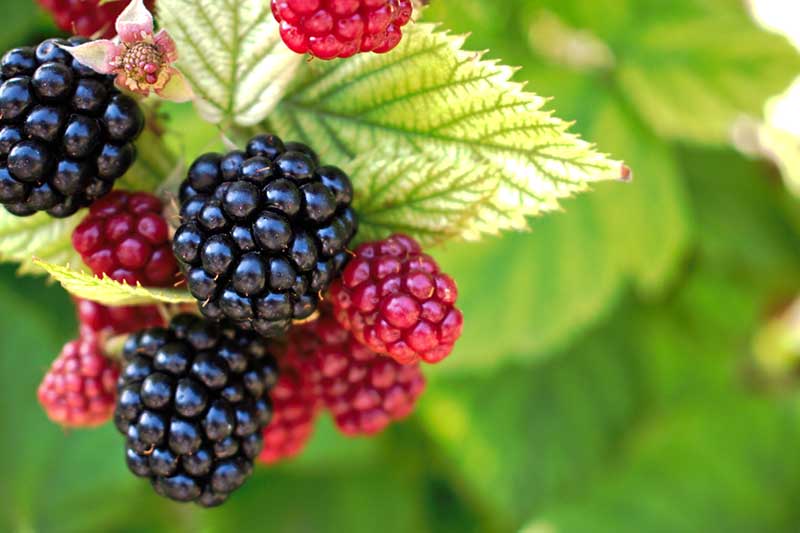
Photo by Fanny Slater.
We link up to seller to aid you find relevant products . If you buy from one of our links , we may earn a mission .
you may learn all about the account , cultivation , andcare of garden - grown blackberry in our scout . In this templet , we ’ll discuss how to grow these tasty berries in pots and containers .
Here ’s what I ’ll overcompensate :

What You’ll Learn
A Bit About Blackberries
Blackberries arebrambles , or cane berries , that belong tothe Rosaceae family .
They bear fruit on two-year theme , which are have it off as canes – hence the moniker “ cane Chuck Berry , ” which also applies to closely related raspberries , along with blackberry and raspberry hybrids and cultivars like marionberries , boysenberries , olallieberries , and loganberries .
In the first yr , a blackberry industrial plant will put out unripe , tenderprimocanes , which grow leave-taking but not flowers or fruit in most cause .

After a year of growth and dormancy , the former primocanes become woody , and are then called floricanes . These acquit flowers and fruit on sidelong shank . Plants can be sort as erect , semi - erect , or chase .
A number ofRubusspecies are consider to be type of blackberries;R. allegheniensis , R. argutus , R. armeniacus , R. laciniatus , R. ulmifolius , andR. ursinusare six of the most notable .
But dozen of cultivars exist today , and they ’ve been multiply so extensively that it ’s difficult to pinpoint which raging species contributed to their creation in many casing .

Nevertheless , we are thankful to breeders for cultivating blackberry bush bushes to have few or no thorns , or to produce just three to four foot tall , or even to carry fruit on primocanes .
Regardless of the cultivar , the fruit are typically around an column inch in duration – sometimes larger and sometimes littler – and are both sweet and sharp , sometimes more of one than the other , depend on the cultivar .
The Chuck Berry are antioxidant - rich and contain high-pitched level of vitamin C , E , and K , Mn , and calcium . They ’re also high in fiber : a one - cup dish contains eight grams !

Blackberries opt loamy , well - draining soil with a pH between 5.5 and 7.5 . They are stout in Zones 4 through 9 .
They tend to grow anywhere from three to 10 feet tall with a like spread , which might have you asking why in the world you ’d need to develop them in containers .
We ’re beaming you need .

Why Grow in a Container?
You know how we refer that these plants have an telling sprawl ? If you crave blackberries but do n’t desire an enormous brushwood of them , planting them in containers is a good direction to keep the canes in check .
For starters , they wo n’t be capable to regurgitate easy via hole-and-corner rhizomes . They ’ll only go as far as the container allows , which means they ca n’t overtake your K or garden . This is especially true of tumid or semi - erect cultivars .
Trailing plants are really only ideal for container develop if you plan to educate them on a treillage . And you ’ll have to watch out for isolated canes that come into impinging with the ground outside of the container , because they ’ll put down roots .

If , on the other hand , you live in an apartment , a home with a small curtilage , or a letting where the landlord does n’t want you to found anything like a shot into the primer coat , you’re able to just originate your harvest in a container .
Plus , there are several compact varieties that you could grow in containers without worrying too much about run out of room . With regular pruning , you may keep your piffling Charles Edward Berry brushwood small and fruitful for years .
Choosing the Right Container
These plant grow a shallow root system that have a go at it to disperse wide rather than deep , so you ’ll want a container that accommodates this .
Whiskey Barrel Planter
A whiskey barrel plantation owner that is at least 24 inch in diam , like this one that’savailable from the Home Depot , is a perfect alternative .

Whatever container you choose , make certain it ’s at least 24 inch in diam and 12 in deep . This will give your flora ample space to stretch and grow .
Plus , by planting it in a large container to commence with , you wo n’t have to worry about transplanting it into something bigger just a few years later .
If you must , you’re able to get off with putting your plant in an even small container – around 12 to 15 inch wide of the mark and at least six column inch cryptical .

But you ’ll want to plan to transfer it into a big container once it start exhibit signs of being rootbound : yellow , droop leaf ; an gain in plague and disease issues due to accent ; or a systematically diminished yield of yield .
Since blackberries can get top - labored during fruiting time of year , it ’s wise to endue in a container made of forest , pit , or heavy plastic to preclude it from toppling over .
Whichever pot you choose , make certain it has drain hole or cleft to prevent the soil becoming oversaturated .

Preparing Your Pot
The easiest direction to get set about with your container - grow blackberries is to buy a nude root or alive flora from a nursery .
Bare roots are best plant in the springtime , whereas live plants can go in the wad any time in the spring or summer .
blackberry bush need full sun for thrive , so regain a office on your deck or balcony , or in your garden , that receives at least six to eight hour of sunshine every day .

If you ’ve purchase a bare ascendant , place it in a bucketful of room - temperature pee to soak for up to two minute before planting .
Fill your chosen container with a potting mix that arrest fertilizer .
I utilise Nature ’s Care potting mix from Miracle - Gro , available from the Home Depot , because it feed any plant for up to two months – and for blackberries , that ’s all you demand in the first year .

Miracle - Gro Nature ’s Care Potting Mix
or else , youcanfill your container with a intermixture of one - third surface soil , one - third perlite or vermiculite for drain , and one - third well - rotted manure or compost .
If you choose this alternative , you ’ll also want to shuffle in a 10 - 10 - 10 NPK fertilizer accord to bundle instructions .

I do not commend that you practice soil from your garden in your pot as this can introduce undesirable pests or diseases .
Whatever you do , do n’t add soil that ’s antecedently been used to mature any type of cane Chuck Berry , roses , or any members of the Rosaceae house , as this increase the likelihood of the grime hosting diseases or pests that can damage your blackberry bush plants .
Once your container is full , make a hole with the astuteness and width of the bare root or rootage ball of the live plant you ’re transplanting .

Carefully place the plant inside the hole and backfill the hole with grease . Water tardily , until water drain out the bottom of the container .
How to Grow
It ’s of import to keep the soil moist , especially when your plant is work on on ground its root system in the newfangled container .
Since container soil dry out quicker than the shite in an in - earth garden , it ’s knowing to check it each 24-hour interval with your finger’s breadth . If it feels dry an inch down , it ’s meter to irrigate the plant life again .
impart a two - inchlayer of mulchcan help to lock moisture in , which is especially significant in live , dry climate . I love using bark mulch , but any mulch will do .

Every spring , just as novel growth is beginning to appear , fertilize your plant with a 10 - 10 - 10 NPK plant food according to package instructions . Or , add several smattering of compost or well - rotted manure . Read our guide to fertilizing blackberriesfor a full laydown .
I like to add several grievous bodily harm of fresh potting mix to my containers in the spring , too , to refresh up the bay window and get it ready for a new growing time of year .
former spring is alsoa good time to prunethe plant back to three foot in height , and snip the sidelong branch back to about 12 inches in length .

The blackberries will involve another pruning in the dusk . write out all the spent floricanes off the plant and shave the key canes down to three feet again . Laterals should be dress back to 12 to 15 inches .
Primocane - fruit blackberries are even easier to like for , since there ’s no motivation for a spring pruning .
All you need to do is slue the spent floricanes back to the dry land every fall after the plant life enrol dormancy , and leave the primocanes alone .

The following year , you ’ll get yield on last class ’s primocanes again – now ring floricanes – in the summertime , and on the newly develop primocanes in the spill .
Throughout the develop time of year , get rid of any broken , dead , or diseased canes .
If you live in geographical zone 7 and above , a fresh two - column inch level of mulch put in placebefore winter hitsshould keep your plant glad during dormancy by protect the roots from cold temperature .
But gardeners in Zones 4 through 6 motive to give theirs a bit more protective cover . After the fall or winter ’s first hard freeze , enlist some help to move your container into a sheltered space like a service department or a shed .
Mulch with a four- to six - inchlayer of strawand pass on it in the garage or other indoor location until the temperature systematically rise above freezing in the give .
Or , you could leave it where it is , mulch with at least six to eight inches of straw , and place a breathable plant insularity bag over the canes , like this one from the Home Depot .
Drawstring Frost Plant Cover
Regardless of which method you used to overwinter your plants , you ’ll postulate to keep tabs on the soil moisture each week during the winter .
If it ’s frozen , do n’t irrigate it . If it is not frozen , water it a few times a month , just barely enough to keep the soil from drying out .
Growing Tips
Cultivars to Select
Fifty years ago , you would ’ve had a slew of difficulty turn blackberry in containers . Imagine attempt to fit a sprawling , wild blackberry that spring up up to 10 feet tall in a 24 - inch pot !
Thanks to broad breeding , there now survive two cultivars that shine as container - grow plants .
Baby Cakes
For one of the newest and most popular cultivars to produce in a container , try ‘ Baby Cakes . ’ This disease - resistive cultivar grows to a height of just three to four foot with a paste of three to four feet .
Thornless and vertical , ‘ Baby cake ’ bears yield on primocanes and floricanes , so you ’ll get a craw from the first year of planting .
‘ Baby bar ’ is hardy in Zones 4 through 8 , blooms with ashen flowers in the spring , and turn out juicy fruits on floricanes in summer solstice and then again on primocanes in the fall .
‘ Baby Cakes ’
develop by breeders at the University of Arkansas , and also have a go at it as ‘ APF-236T,’‘Baby cake ’ is part of the Bushel and Berry ® Collection , hand out by Star ® Roses and Plants .
This languid cultivar pull ahead the Best in Show award at the Farwest Show in Portland , Oregon in 2016 and became uncommitted to the public in 2017 , so it ’s a relatively raw treat .
The berry are large , juicy , and sweet . you may find live plants in two - congius containersfrom Nature Hills Nursery .
Natchez
Do you long for a cultivar that ’s prized for its extra - mellisonant flavor but also fits in a container ?
Then ‘ Natchez ’ is your berry . Hardy in Zones 5 through 9 , the thornless , semi - erect ‘ Natchez ’ grow to between four and five foot tall , and spreads three to four feet .
Since it ’s semi - vertical , you may need to use a tomato plant John Milton Cage Jr. or a alike accompaniment with your container - grown works . But you wo n’t involve to trellis it – unless you want to .
‘ Natchez ’
A disease - immune , floricane - fruiting cultivar , ‘ Natchez ’ bloom with pretty pink - livid flowers in the early outflow . In June , the pollinated blooms ripen into large , topnotch - sweet berries .
Like other outstanding blackberry bush cultivar , ‘ Natchez ’ was bred by horticulturist at the University of Arkansas .
you may find dwell plantsavailable from Burpee .
Managing Pests and Disease
The good cultivars to grow in container are also bred to be the most disease resistant , so container acquire blackberry have a leg up when it come to fighting off unwanted pestilence .
Another bonus of growing these bramble in containers is that they ’re more ego - contained and are n’t prostrate to spreading and ravel with other plants , thus increase the chance for pestis infestations .
Blackberries are n’t extremely susceptible to pests or disease . But keep an eye out for anthracnose , blackberry rosette , and cane rust , and intimately inspect your works every few years to stay ahead of any aphid orJapanese beetleinfestations .
Avoid overhead watering to help keep fungal infection aside , and if you do see any signs of fungous contagion , such as gray lesions or spots on the leafage , spray the works with copper color fungicide .
For pests – peculiarly aphids – a neem crude oil - base atomiser works wonder .
Harvesting and Preserving
Once the berries turn from burnished bolshy to dark purple or black , they ’re ready to harvest . Go out to your container garden in the morn , when the berries are freshest for break up .
If you ’ve pick out to grow a bristled sort , wear a long - sleeved shirt and a twain of gloves to ward off injuries .
To glean , gently towboat on each berry to get rid of it . The yield should amount off easily , core intact . Keep in brain that the berry in a unmarried bunch wo n’t all mature at once , so check your garden regularly .
exhaust them or bake them into a Proto-Indo European or prostitute right away . This might not be possible if you only grow one plant , but if you have two or more plant ripening at once , you should have enough for a moony , homegrown pie .
To block your harvest for by and by , rinse the berry and permit them to dry before spreading on a baking sheet in a single layer . permit them freeze for several 60 minutes , and then remove to a freezer - safe bag or container for storage .
If you have surplus freezer safe canning jars and hat lie around , these make fantastic container for paw - break up berries . I always have a jar or two full of berries in my freezer .
And of row , if you ’re one of those heady multitude who knows how to make jam , have at it and send me a jolt when you ’re done !
( I can dream , veracious ? )
Recipes and Cooking Ideas
On a blistering summer day , I adore brush up my tastebud with this blueberry bush pomegranate chia frescafrom our sister web site , Foodal , except I apply blackberries instead of blueberries to make it .
Or , you may combine the two for a blackberry - blueberry bush Punica granatum chia fresca . Yum !
Another favorite of mine is this recipe for berry peach crisp , also from Foodal , made with blackberry bush or else of blueberries . serve strong with ice ointment on the side , of course .
And you may always toss the berry into scones , muffins , smoothies , and more !
Berry Accessible
The best affair about growing blackberries in container is that those with large yards as well as small - outer space gardener can grow and enjoy them .
And for more information ongrowing berriesin your garden , check out these guide next :
Photos by Fanny Slater and Meghan Yager © Ask the Experts , LLC . ALL right RESERVED.See our TOSfor more particular . Product picture via Burpee , Home Depot , and Nature Hills Nursery . Uncredited photos : Shutterstock .
About
Laura Ojeda Melchor
